
Blog
3.10.26
We Aren’t Building a Better Tool. We’re Rebuilding Security.
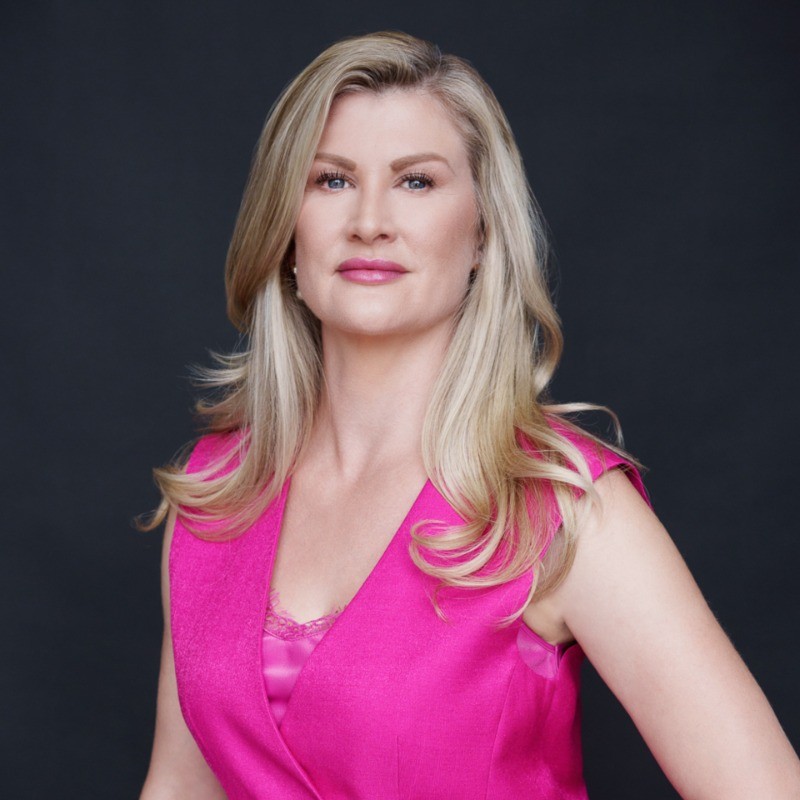
Galina Antova
Co-Founder & CEO


You cannot win a machine-speed war with human-speed defenses. That conviction is what Kai was founded on. Today, as we emerge from stealth with $125 million in funding, it’s what we’ve spent the last year proving.
Our founding thesis was simple and radical: the answer to AI-powered attacks isn’t adding AI to more tools; it’s replacing the tools altogether. Replacing the fragmented stack. Eliminating the manual workflows. Ending the broken handoffs between categories. And putting in their place a single agentic AI platform that does the actual security work - autonomously, continuously, across threat intelligence, exposure management, detection, response and beyond - as one unified pipeline with no silos, no boundaries, no human-speed bottlenecks.
But a vision without proof is just a claim. So, we built it before we talked. In ten months, we’ve done exactly that, delivered autonomous security work across multiple use cases for Fortune 500 and Global 1000 enterprises across multiple verticals, and generated seven figures in bookings. Customers compressed months of manual analysis into minutes, every day, without increasing headcount, and reduced risk faster. These aren’t demos. They’re proof points. And we’re just getting started.
We had the conviction that agentic AI could rebuild security from the ground up. The roadmap was built with the community. Hundreds of security practitioners told us the real pain lived in the daily grind of fragmented tools, missed signals, and work that never gets done. Dozens of design partners rolled up their sleeves and iterated with us until the vision became something real. We didn't build Kai in a vacuum. We built it with the people who live with the problem every day.
We’ve made tremendous progress in one year, and we’re just getting started.
When I co-founded Claroty, we helped create the OT security category. I was proud of that. But categories have a cost. Every new problem in security became a new tool, a new team, and a new silo. Enterprises chased best-of-breed across dozens of point solutions and ended up with something nobody planned for: a security stack so fragmented it became an operational burden in its own right.
Attackers don’t care about our categories. Yet we built our defenses in silos, and attackers continue to exploit the gaps between them. With machine-speed autonomous attacks, the model is breaking. No amount of budget, headcount, or incremental tooling is going to close that gap. The problem is the model, and that model has reached its absolute human limit.
When generative AI burst onto the scene, the security industry's response was predictable: they rushed to wrap it around existing tools and ship “Smarter SIEM, AI-assisted SOC, Copilots for analysts.” The same fragmented architecture, now with an AI label.
Incremental value, incremental thinking, incremental ambition, on top of the same fragmented stack that was already failing.
We think that's the wrong answer: not because the technology is bad, but because the ambition is too small. We have agentic AI, foundation models, and inference at a scale that would have been unimaginable three years ago.
Using those building blocks to make existing tools marginally better is a failure of imagination.
We saw something different. Agentic AI doesn't just accelerate human workflows, it replaces the need for them. The real opportunity is to stop deploying software that puts human defenders in a position to fail and start deploying intelligence that fights AI with AI.
And it isn't just an opportunity. It's an obligation.
Kai is not a tool. It's an agentic AI platform built from first principles to do security work end-to-end: gathering exhaustive context, continuously assessing risk, prioritizing action, and reducing risk. All without human bottlenecks, broken handoffs, or waiting.
Our agents don’t sit on top of use cases and domains, they continuously work across them. They compress months of analysis into minutes, not as a demo trick, but as a daily operating reality for our customers.
The reactions we’ve heard from those customers say it better than I can. One of our customers framed it as well as anyone: “Kai executes our most complex, unscalable security work across multiple use cases: threat intel to exposures to detection outcomes, as one continuous autonomous pipeline, with asset business value built into every decision. Kai does the work so my team can focus on strategy.”
My co-founder Dr. Damiano Bolzoni and I spent years helping converge IT and OT security. Two worlds that everyone said couldn’t be unified. With Kai, we’re doing it again, at a larger scale: dissolving the walls between security, engineering, and IT entirely.
Our vision is to become the AI-powered operating system for enterprise security, a platform with no categories, no silos, and no human-speed bottlenecks. A platform where defenders stop reacting and start leading.
One Fortune 500 CISO told us: “For the first time, I’m getting human-quality analysis at machine speed and scale, not just in one area, but across multiple major security use cases. Nothing else I’ve seen comes close.”
Another security leader put it simply: "Kai doesn't ask my team to do more. It does the work for them. I haven't seen anything go this far, this easily - it does things we simply can't do today, no matter how much effort we throw at it. That's not incremental. That's game changing."
We are at a singular moment in the history of technology. The building blocks to reimagine security from first principles are finally here. And customers are tired of complexity and fragmentation. They are genuinely ready for something different and open to a fundamental rebuild.
Cybersecurity is quickly becoming a contest between AI systems. Attackers are already operating with AI. Defenders are still using tools with humans as operators. Kai is how that gap closes.
This isn’t an upgrade. It’s a rebuild. And we’re just getting started.

