55%
of CISOs already let machines discover and inventory assets without approval


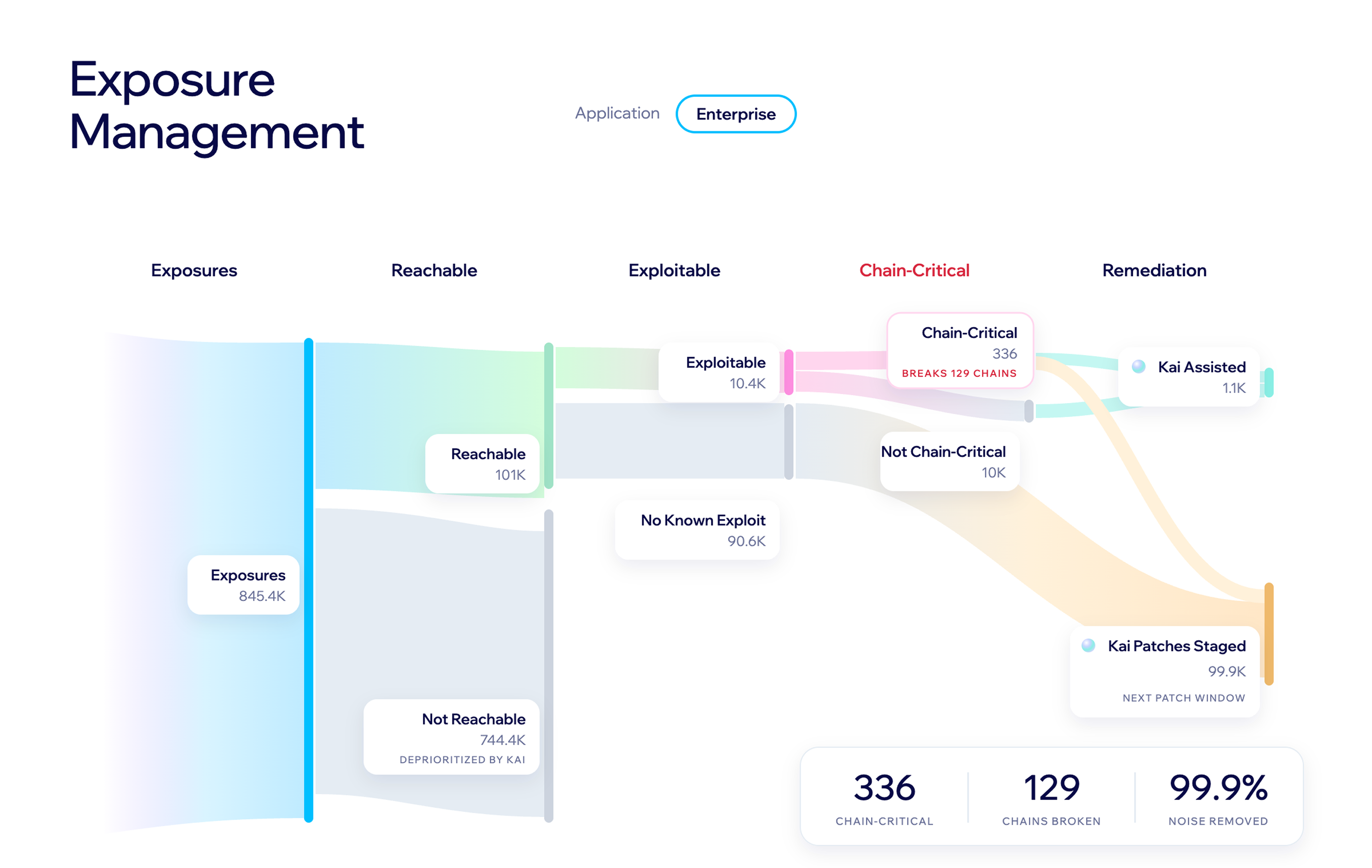
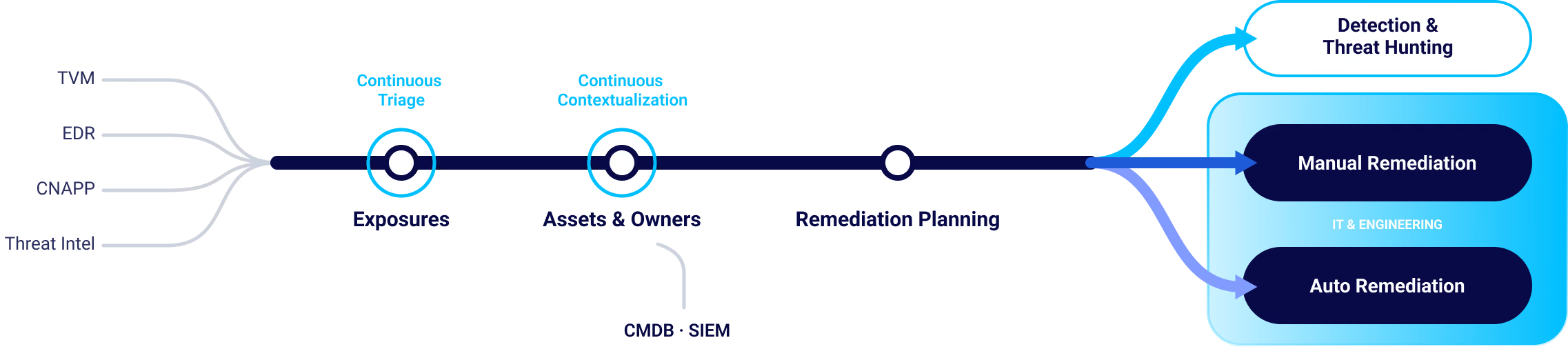
CTEM is a program, not a product. Kai runs the stages enterprises never manage to staff, above all mobilization, which is where programs stall and where most tools stop.
Scoped to business applications and units, not to subnets
Over ninety percent of findings removed on exploitability before triage
Proof attached to what survives, so work is argued from evidence rather than severity

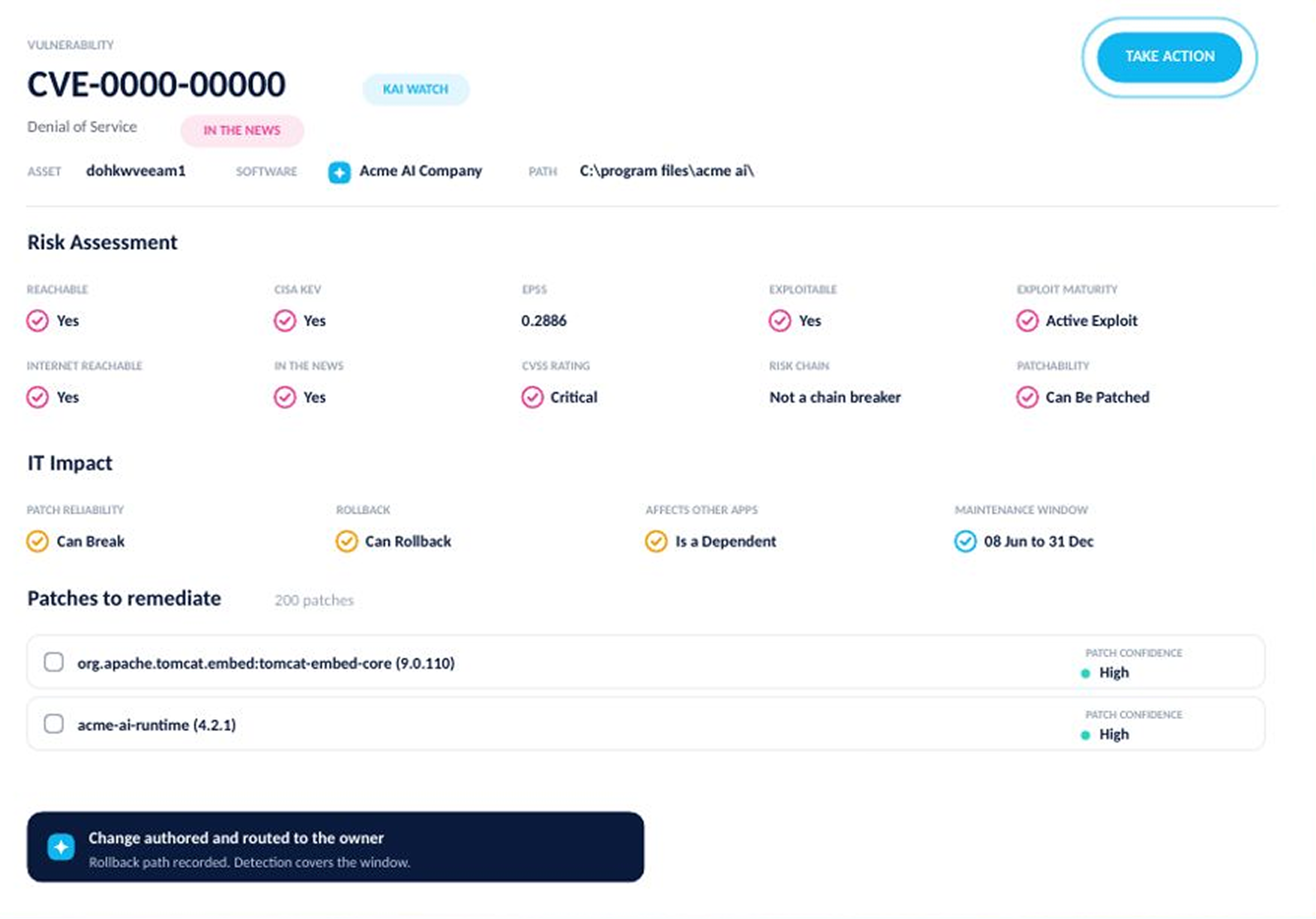
Most tools stop at the ticket. Kai writes the change itself, and where a maintenance window blocks the patch, specifies the configuration change to the controls you already run instead.
The specific fix for that asset, with its sequencing and prerequisites
Routed to the accountable owner and shaped to their change window
Executed inside the boundary you set. Outside it, staged with the owner named
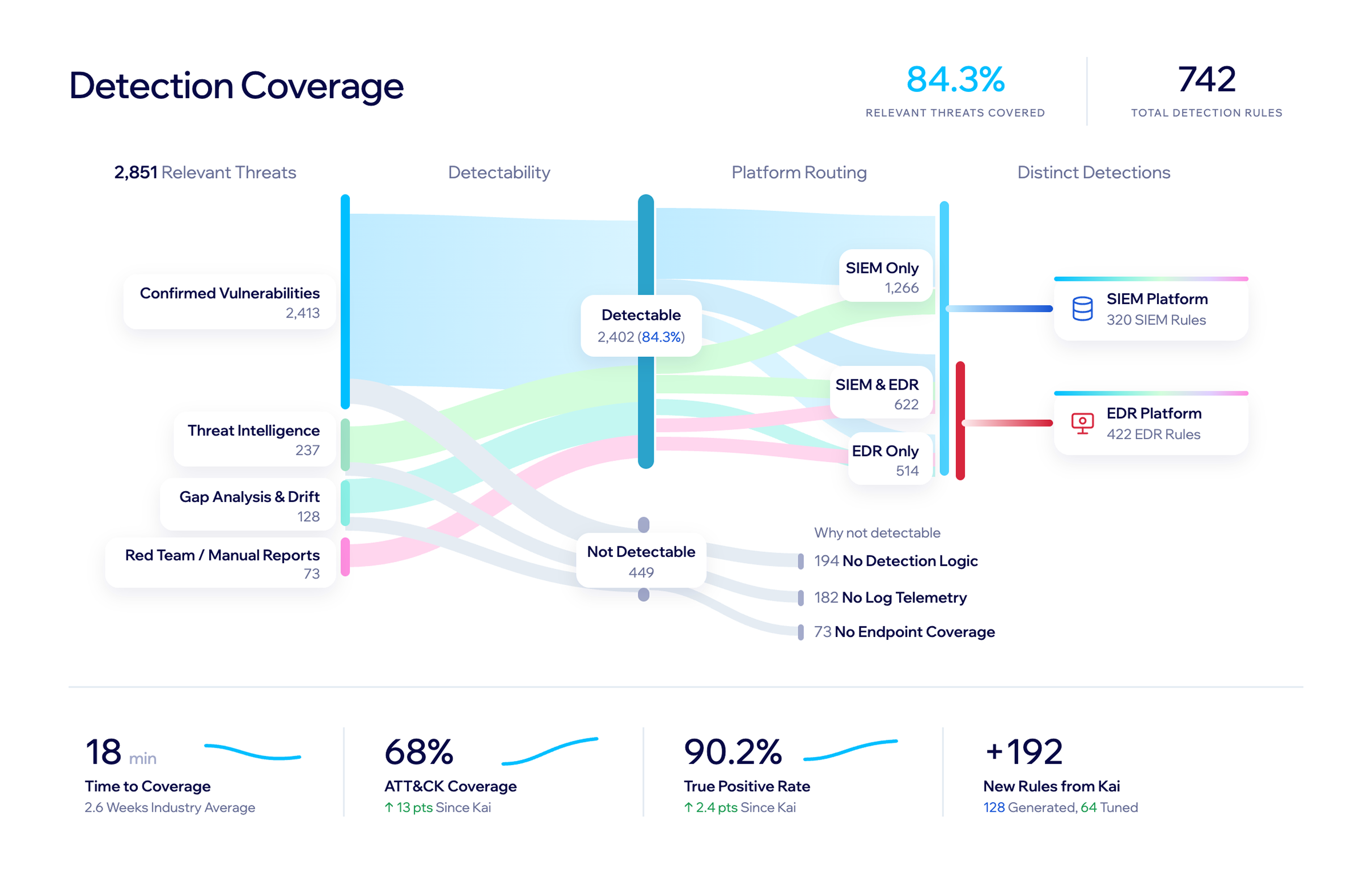
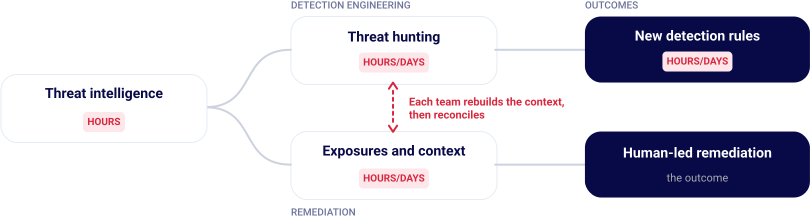
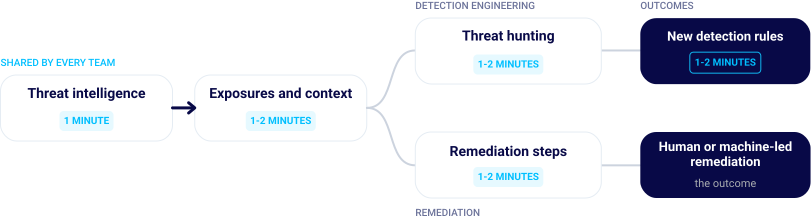
Threat intelligence tells you what is being exploited. Detection engineering turns that into a rule. Kai does both in one pass, scoped to the exposures you actually have.
Rules written against confirmed exposures, not every published technique
Authored in hours and delivered into the SIEM and EDR you already run
Detection standing in for the patch when a maintenance window blocks it
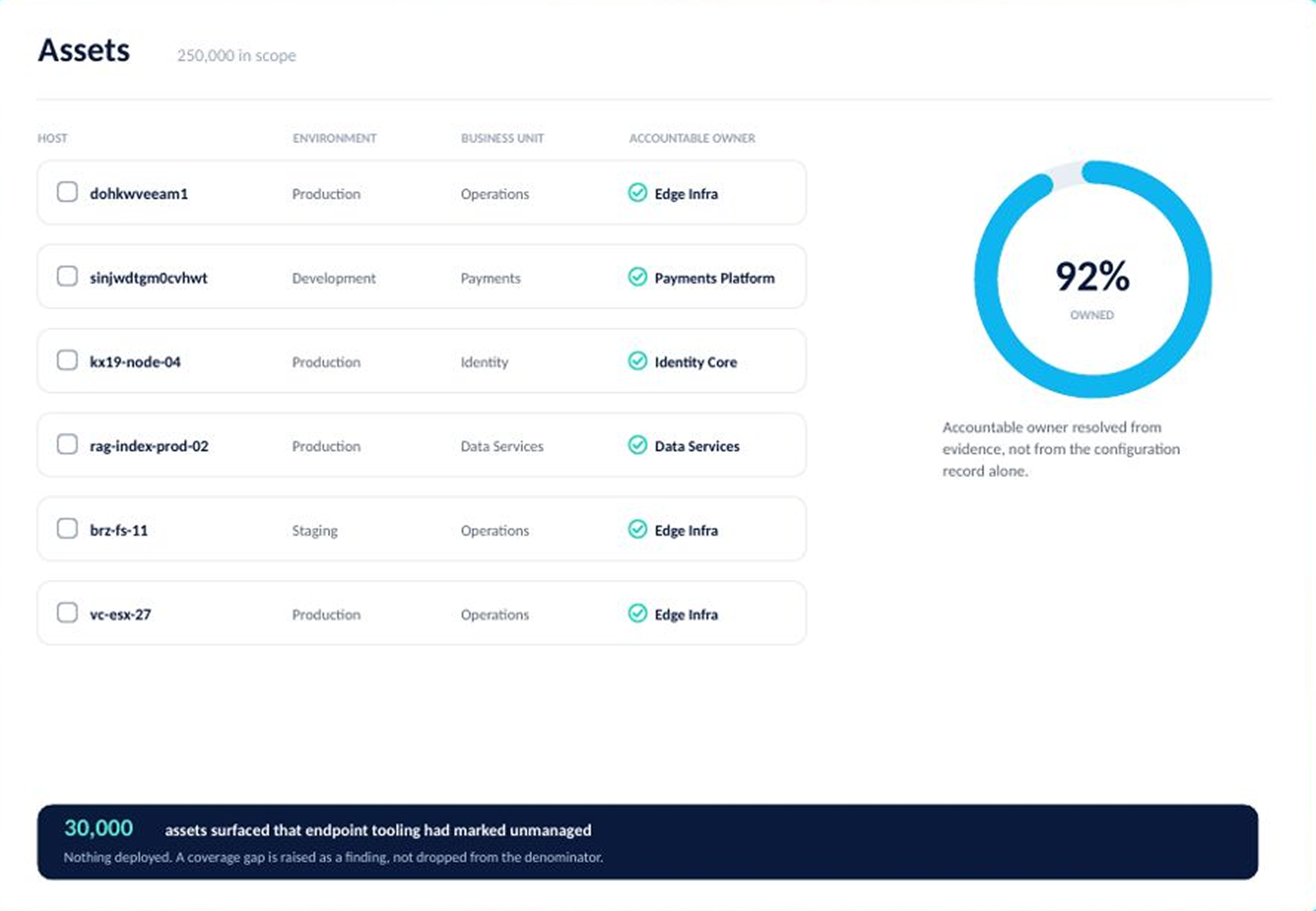
Kai does not reconcile what your systems already believe. Agents interrogate the CMDB, endpoint, cloud, identity, scanning and code systems, then rebuild the asset record from evidence.
Owner, environment, and business application on every asset
End-of-life and end-of-support issues surfaced with lead time
Assets missing an active EDR agent or scanner returned to coverage
Risk closes at machine speed
The time a known exposure stays open is the risk. Weeks of it are removed, not compressed.
Your people stop sorting
Nine in ten findings never reach a person. Headcount stops scaling with the backlog.
Every asset has an owner
Up from four percent across 250,000 assets in under twelve hours, so work routes first time.
One platform, not four
An asset tool, a prioritization layer, a validation product and the orchestration bolted to both.
Ownership figures are from a Fortune 50 energy company. Queue reduction is over ninety percent and varies by environment, language ecosystem and scanner mix. Consolidation counts tool categories replaced.


