

See your environment as an attacker would.
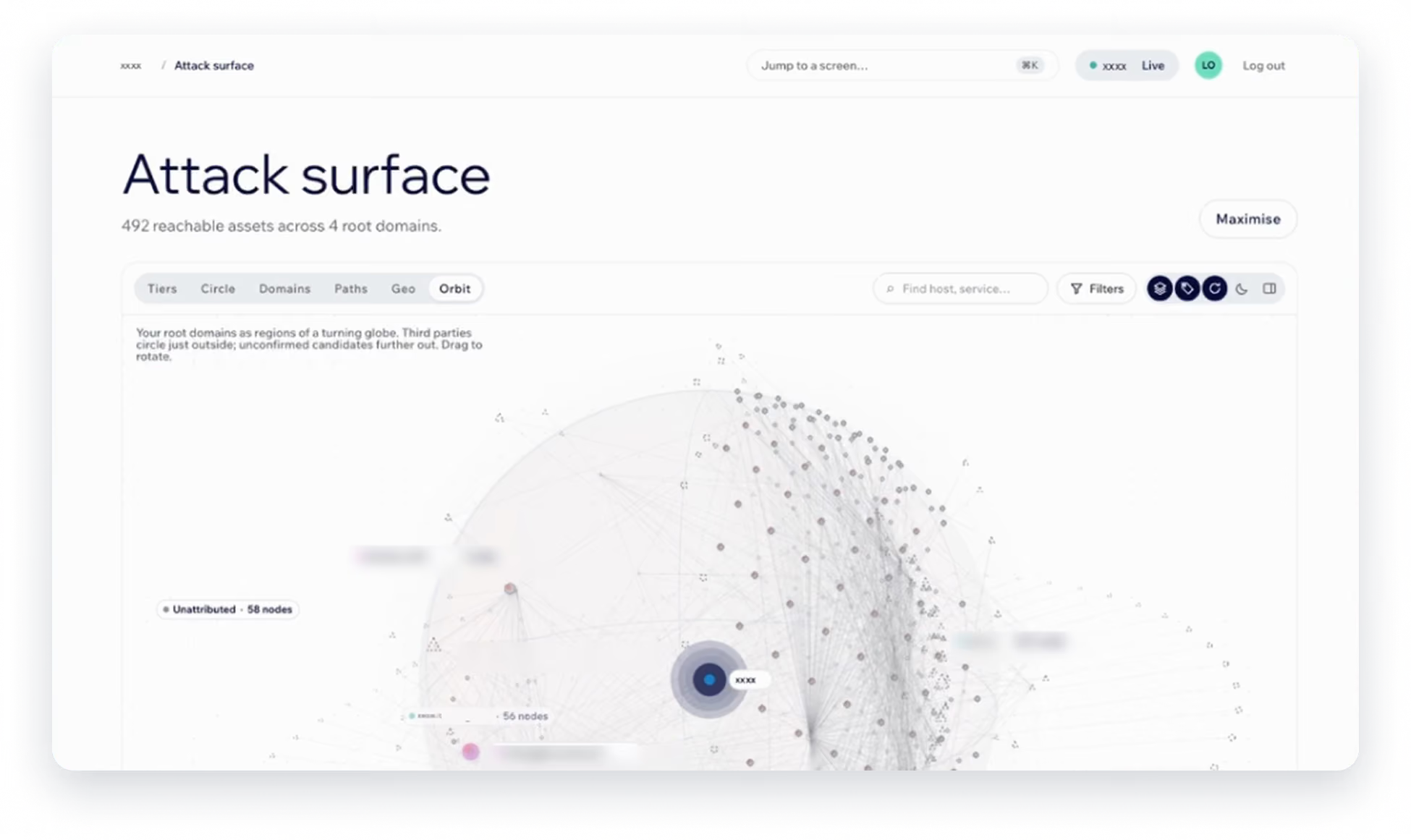
Attackers find your exposed assets before your team does
Frontier AI is discovering critical vulnerabilities like PHP2Shell faster than humans ever could, which means attackers can exploit these gaps just as quickly. Machine-speed attacks on external vulnerabilities require machine-speed defense to find and fix those exposures first.
of enterprise vulnerabilities remain unpatched after 12 months.
Source: Cloud Security Alliance. The Collapsing Exploit Window: AI-Speed Vulnerability Weaponization, April 2026.
See what attackers see, and fix it in the queue you already run
From a company name, Kai finds what you expose. Every external exposure lands in the same queue and workflow as everything else Kai protects.

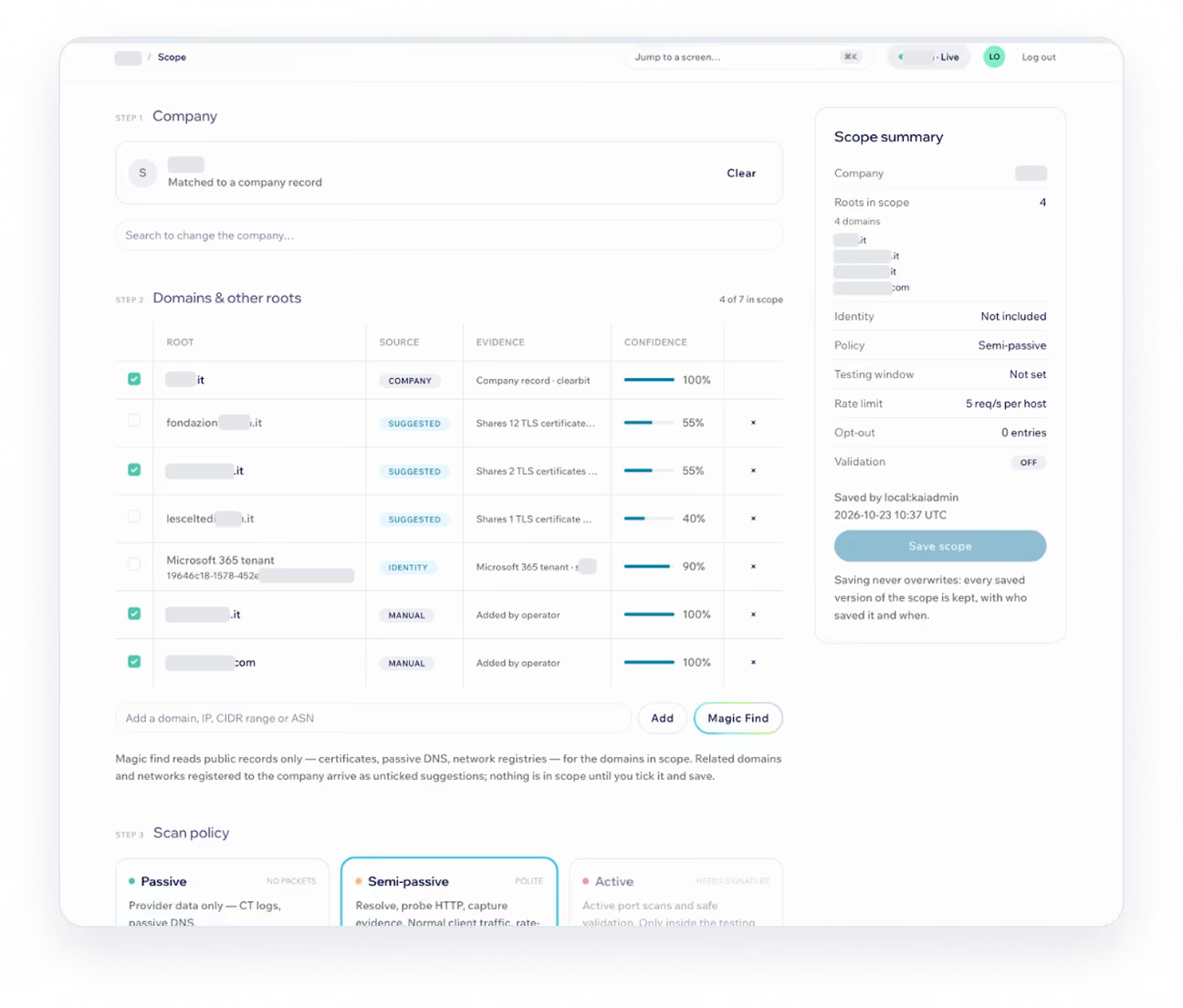
Start from a company name: the entity and its subsidiaries, each with source, evidence and confidence
Passive discovery by default, active steps only with a signed authorization
Each exposure records its rule and evidence, matched to assets Kai already knows
Nothing is in scope until you confirm it
API specs, LLM endpoints, MCP servers and leaked keys found from outside
Prioritize, assign owners and track SLAs in the queue you already run
From a company name to an owned exposure, nothing deployed
1
2
3
4
From two pictures of your company to one answer

A second console to watch
A second queue to reconcile
External findings matched to internal data by hand
Two answers for the board
One asset record, inside and outside
One queue and one accountable owner
Matched to assets Kai already knows
One answer for the board
Turn it on and control the scope

Frequently asked questions
What is Kai EASM?

Kai External Attack Surface Management is part of the Kai Autonomous Defense Platform. It discovers what your organization exposes to the internet, attributes each asset to you with evidence, and turns what it finds into exposures that land in the same queue as everything else Kai manages.
How does Kai know what we own?
You give it a company name. Kai resolves it to a legal entity, you confirm the domains and subsidiaries, and it expands outward through certificates, passive DNS, archive data and internet scan data. Every asset carries a confidence score and the evidence behind it.
Does this create a second queue to manage?
No. External findings are normalized into the same finding model as internal ones and pushed into the same asset record, ownership model and remediation workflow.


